StopWatt Reviews 2026: Don’t Make a Decision Until You Understand What It Really Does
StopWatt Reviews 2026
Rising electricity bills can make homeowners look for simple ways to reduce energy consumption. One product that has attracted attention online is StopWatt, a compact plug-in device marketed as an electricity-saving solution.
But before ordering any energy-saving gadget, it is important to understand what it claims to do, what it can realistically achieve, and whether the advertised benefits match the technology behind the product.
This detailed StopWatt review takes a closer look at how the device is presented, its potential advantages and limitations, installation, pricing considerations, and the questions buyers should ask before making a purchase.
Ready to learn more about StopWatt? Check the official product details today.
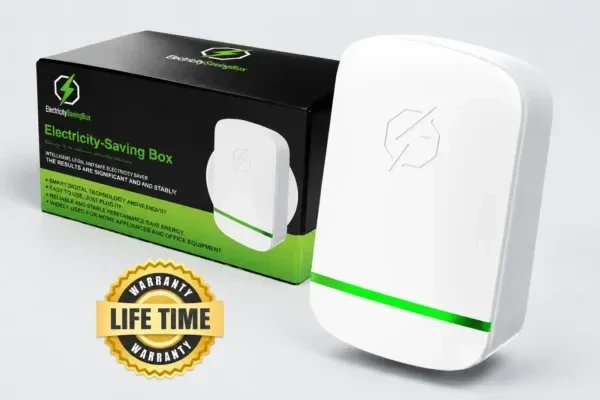
What Is StopWatt?
StopWatt is marketed as a small electrical device designed to be plugged into a standard household outlet. Promotional descriptions commonly position it as a way to improve electrical efficiency and potentially reduce wasted electricity.
The appeal is straightforward: instead of making major changes to appliances or household wiring, consumers are encouraged to plug the device into an outlet and let it operate in the background.
This makes StopWatt particularly attractive to people searching for an inexpensive and convenient approach to managing household electricity costs.
However, the important question is whether a small plug-in device can actually reduce the amount of electricity a typical household consumes.
How Is StopWatt Supposed to Work?
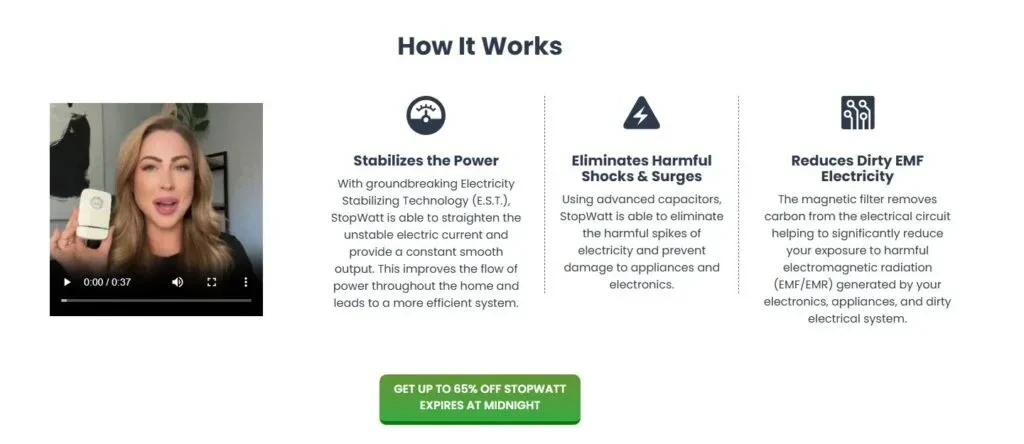
StopWatt is generally promoted around the concept of improving power efficiency. Marketing material may refer to electrical fluctuations, power quality, or wasted energy as reasons households could benefit from such a device.
In electrical systems, power factor correction is a legitimate engineering concept. Certain industrial and commercial electrical loads can create reactive power, and equipment designed for power-factor correction can improve the efficiency of those systems.
However, residential electricity billing is different.
For many household customers, electricity consumption is primarily measured in kilowatt-hours (kWh). A device cannot automatically eliminate ordinary energy consumption simply because it is plugged into a wall outlet.
Therefore, consumers should distinguish between:
- Improving power quality
- Correcting power factor
- Reducing actual household energy consumption
- Reducing the electricity shown on a residential utility bill
These concepts are not necessarily interchangeable.
Want to explore a simpler approach to energy efficiency? Take a closer look at StopWatt.
StopWatt Features
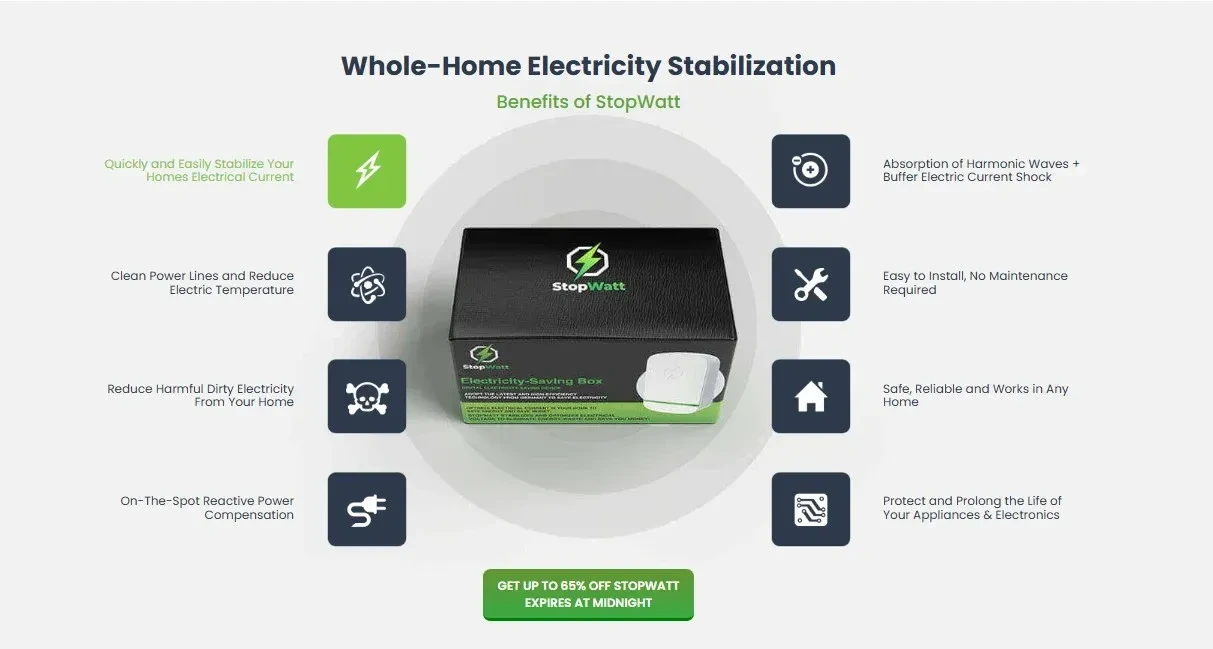
The product's appeal comes largely from its simplicity. Depending on the version and seller, StopWatt is promoted with features such as:
Plug-and-Use Design
The device is designed to be connected directly to a household electrical outlet. This eliminates the need for complicated installation.
Compact Construction
Its small form factor means it can generally be placed near an electrical outlet without taking up significant space.
Easy Setup
Unlike major energy-efficiency upgrades, a plug-in product does not require an electrician or household renovation simply to install it.
Everyday Operation
The product is marketed as something that can remain connected while the household continues using its normal appliances.
Potential Energy-Efficiency Benefits
Marketing claims focus on improving electrical efficiency and reducing unnecessary losses. Buyers should nevertheless verify exactly what measurable savings are supported by independent evidence.
Can StopWatt Really Reduce Your Electricity Bill?
This is the most important question for potential buyers.
A household electricity bill is primarily influenced by how much electrical energy appliances consume and the rate charged by the utility company.
For example, an air conditioner, water heater, refrigerator, electric oven, washing machine, and other high-powered appliances can account for substantial electricity usage.
Simply plugging in a small device does not mean those appliances suddenly require dramatically less energy.
For a residential consumer, the strongest ways to reduce electricity consumption usually involve reducing appliance usage, improving appliance efficiency, controlling heating and cooling, and eliminating unnecessary standby consumption.
That does not necessarily mean StopWatt has no purpose. It means consumers should be careful about expecting dramatic bill reductions from a small plug-in gadget.
See what StopWatt offers and decide if it fits your home before ordering.
What About Power Factor?
Power factor is often mentioned in discussions about electricity-saving devices.
In simplified terms, power factor describes how effectively electrical power is being converted into useful work in an AC electrical system.
Businesses operating large motors, transformers, and other industrial equipment can have significant power-factor considerations. Utilities may even apply specific charges or requirements to certain commercial customers.
Residential electricity billing, however, is usually based on energy consumption rather than simply charging homeowners for poor power factor.
This distinction is extremely important when evaluating claims that a residential plug-in device can substantially reduce monthly electricity bills.
StopWatt Pros
There are several reasons why a consumer might find the concept attractive.
1. Simple installation:
A plug-in design is easier than making electrical modifications.
2. Compact size:
The device does not require substantial storage or installation space.
3. Convenient operation:
Once connected, the user does not need to operate it constantly.
4. Affordable compared with major upgrades:
A plug-in gadget may cost considerably less than replacing appliances or installing large energy-efficiency systems.
5. Encourages energy awareness:
Purchasing an energy-saving product may encourage homeowners to examine their overall electricity consumption.
StopWatt Cons
There are also important limitations that buyers should consider.
1. Savings claims require scrutiny:
Large reductions in household electricity bills should not automatically be assumed.
2. It does not replace efficient appliances:
An inefficient air conditioner or water heater will continue consuming electricity.
3. Results may vary:
Electrical systems, appliances, usage patterns, and utility billing structures differ between households.
4. Marketing can oversimplify electrical concepts:
Terms such as "power stabilization" and "energy waste" can sound convincing without necessarily explaining measurable household savings.
5. Independent testing matters:
Consumers should look for credible, third-party evidence rather than relying exclusively on promotional claims.
Curious about the latest StopWatt offer? Visit the official website for details.
Is StopWatt a Worth It?
The word "scam" should not be used casually when reviewing an unfamiliar product.
A better approach is to separate the product's existence from the claims made about its performance.
A plug-in electrical device can certainly exist and function as an electrical component. The more important question is whether it delivers the level of savings that consumers may expect from its advertising.
If a seller suggests that simply plugging in one small device will dramatically reduce an entire household's electricity consumption, consumers should approach that statement cautiously and look for measurable evidence.
Before buying, check:
- Who manufactures the product?
- Is the seller clearly identified?
- Is there a legitimate return policy?
- What electrical certifications apply to the device?
- Are technical specifications provided?
- Are savings claims independently tested?
- Are customer reviews from verified purchasers available?
- Does the website clearly explain shipping and refund terms?
These questions can help distinguish a legitimate purchase from an overly aggressive marketing offer.
StopWatt Pricing in 2026: What It Costs
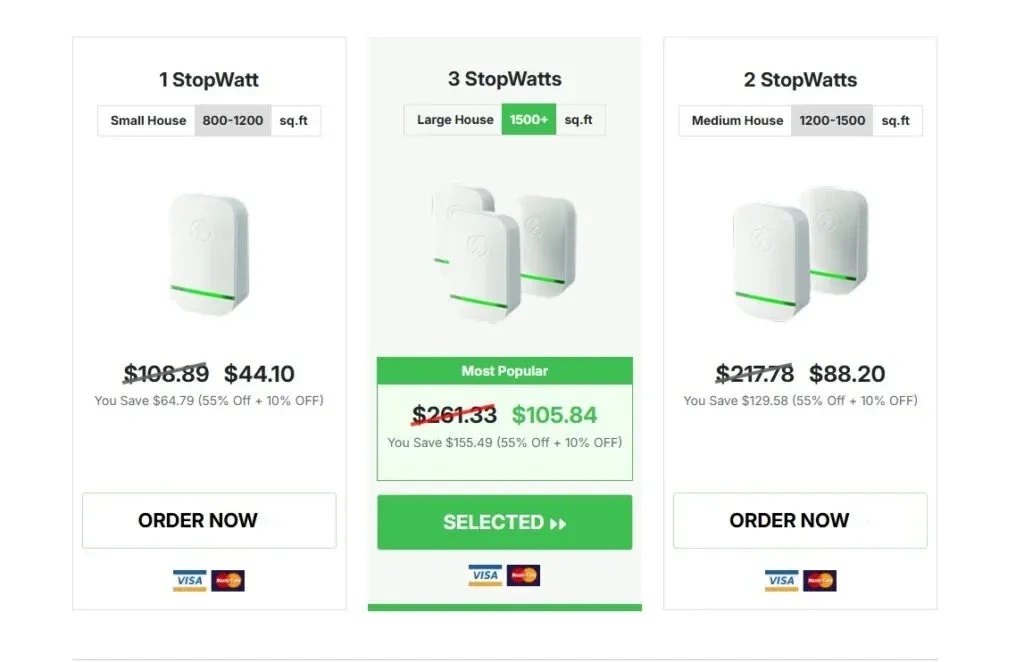
According to the published pricing information, StopWatt is currently offered in several package options. The website presents these prices as part of a promotional offer:
- 1 StopWatt – $44.10: Suggested for a small home
- 2 StopWatt – $88.20: Suggested for a medium-sized home
- 3 StopWatt – $105.84: Suggested for a large home and promoted as the most popular option
The final amount a customer pays may depend on the selected package and shipping option, so buyers should review the checkout page carefully before completing an order.
The seller states that orders are shipped from within the USA through USPS Priority Mail, with standard delivery estimated at approximately 5–7 business days. An express FedEx 2-Day shipping option may also be available.
Customers are also stated to receive an email containing tracking information once their order has been shipped.
Check the current StopWatt pricing and available options before making your decision.
StopWatt Reviews: What Should Buyers Look For?
Online reviews can be useful, but they should not all be treated equally.
A review that simply says "works great" provides very little technical information.
A more useful review explains:
- Previous monthly electricity consumption
- Electricity rate
- Appliance usage
- How long the product was tested
- Electricity consumption after installation
- Whether other energy-saving changes were made
- Whether the difference was consistent over multiple billing cycles
For example, if someone's electricity bill decreases from one month to another, that does not automatically prove that StopWatt caused the reduction. Weather, air-conditioner usage, occupancy, appliance use, and electricity rates can all change.
This is why controlled comparisons are much more valuable than anecdotal testimonials.
How to Reduce Electricity Consumption Without Relying on a Plug-In Gadget
Regardless of whether someone purchases StopWatt, there are several proven ways to address electricity consumption.
1. Manage Air Conditioning
Heating and cooling can represent a significant portion of household energy use. Keeping the thermostat at a reasonable setting, cleaning filters, and maintaining the system properly can help.
2. Replace Inefficient Lighting
LED bulbs generally consume substantially less electricity than traditional incandescent bulbs while providing comparable illumination.
3. Reduce Standby Consumption
Devices left plugged in can consume electricity even when they are not actively being used. Unplugging unnecessary equipment or using smart power strips can help reduce standby consumption.
4. Improve Refrigerator Efficiency
Avoid leaving refrigerator doors open unnecessarily and make sure door seals are working correctly.
5. Use Appliances Efficiently
Running washing machines and dishwashers with full loads, when appropriate, can reduce unnecessary cycles.
6. Monitor Electricity Usage
An energy monitor can help identify which appliances are responsible for the largest share of consumption.
This is often more useful than guessing where electricity is being used.
Is StopWatt Worth Buying?
Whether StopWatt is worth purchasing depends heavily on expectations.
If someone expects a small plug-in device to produce a dramatic reduction in a residential electricity bill without changing appliance usage, that expectation should be treated cautiously.
On the other hand, someone who is interested in experimenting with an inexpensive energy-related device may decide to investigate further—provided the seller offers clear specifications, transparent pricing, appropriate electrical safety information, and a reasonable refund policy.
The key is not to purchase based solely on a dramatic percentage-saving claim.
Looking for more information? Explore StopWatt’s features, usage, and purchase details.
Safety Should Come First
Any product that connects directly to household electricity deserves additional attention.
Before purchasing an electrical plug-in device, check whether it has appropriate safety certification for the country where it will be used. Also verify the voltage and frequency requirements.
Do not use a device that appears damaged, overheats, smells like burning plastic, produces sparks, or causes unusual electrical behavior.
If an electrical installation appears unsafe, contact a qualified electrician rather than attempting to solve the problem with a plug-in gadget.
Final Verdict: StopWatt Review 2026
StopWatt is an interesting product concept, but consumers should approach its energy-saving claims realistically.
The idea of improving electrical efficiency is based on genuine electrical engineering principles, but that does not automatically mean a small residential plug-in device can deliver dramatic reductions in a household's electricity bill.
The most important distinction is between power quality/power factor and actual energy consumption measured in kWh.
Before buying StopWatt, investigate the manufacturer's technical documentation, electrical certifications, return policy, pricing, and—most importantly—independent evidence supporting its claimed savings.
For homeowners serious about lowering electricity costs, combining energy monitoring with practical measures such as efficient lighting, better HVAC management, reduced standby consumption, and efficient appliance use is generally a more sensible starting point.
OfficialSite – https://forbes24x7.com/purchase-stopwatt/
Facebook @OfficialSite – https://www.facebook.com/StopWattOfficialOnlineStore/
https://www.facebook.com/groups/1594162469026341
Comments
Post a Comment